

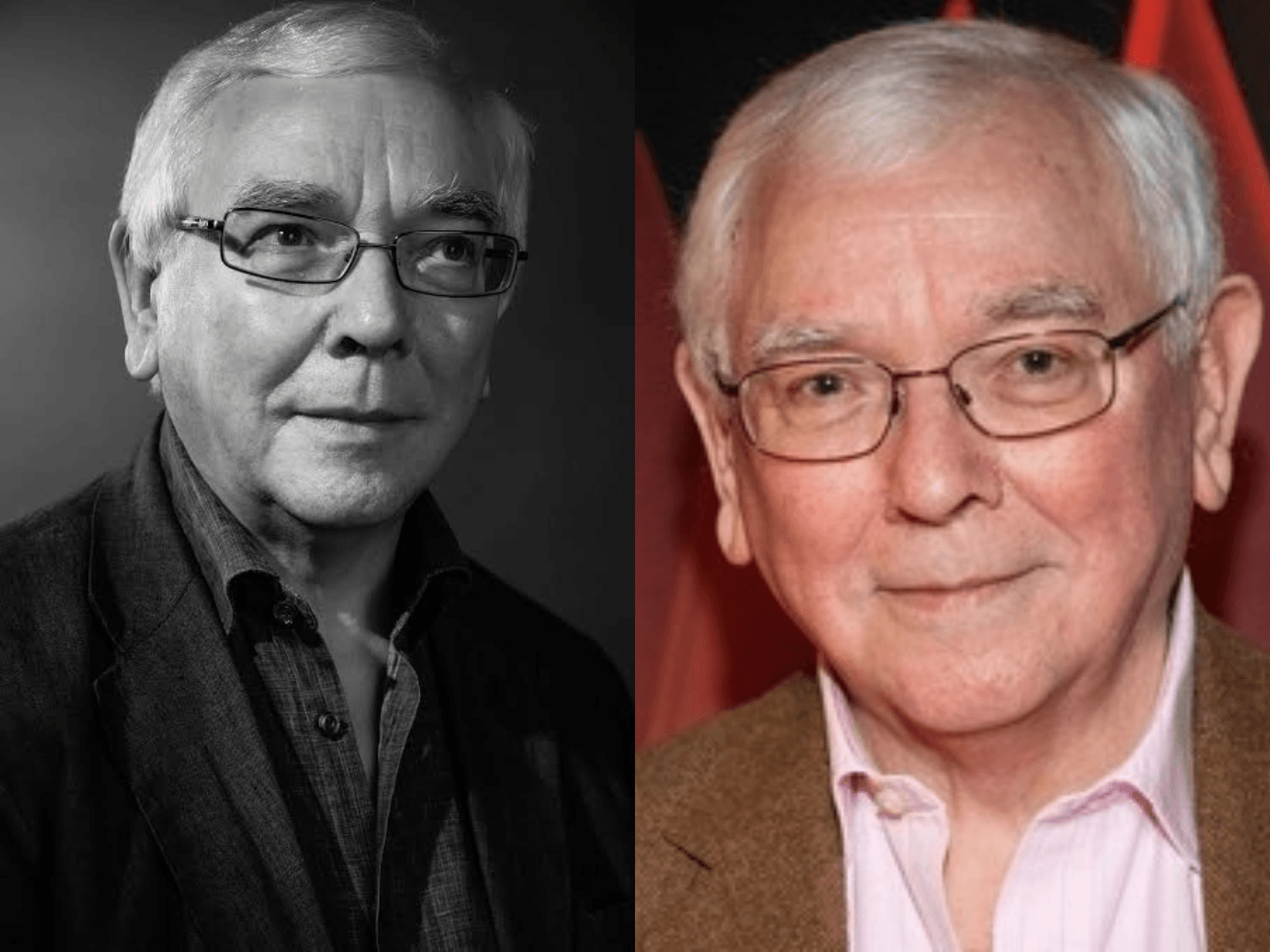
Terence Davies movies form one of British cinema’s most distinctive bodies of work, defined by a poetic, memory-driven style that began as raw autobiography and later expanded into literary adaptations and biographical portraits. The Liverpool-born director, who died in October 2023 at 77, left behind films that the BFI described as having “no tonal or aesthetic equal” .
Terence Davies was born in Liverpool on 10 November 1945, the youngest in a large working-class Catholic family . He spent a decade as a clerk and bookkeeper before entering Coventry School of Drama in 1971, where he wrote the script that would become his first film . A grant of £8,500 from the BFI Production Board allowed him to direct Children despite having never been on a film set .
That short, completed in 1976, became the first part of The Terence Davies Trilogy. Madonna and Child (1980) followed as his graduation film at the National Film School, and Death and Transfiguration (1983) completed the triptych with backing from the BFI and the Greater London Arts Association . Together they chart the life of Robert Tucker, Davies’s semi-autobiographical surrogate, from a Catholic childhood in Liverpool to a lonely death .
The trilogy established the fragmented, memory-based language that would define his mature work. Instead of smooth narrative, Davies offered loosely connected episodes in which songs carry as much emotional weight as dialogue . This approach reached its fullest expression in 《Distant Voices, Still Lives》 (1988), his debut feature and breakthrough.
Set in 1940s and 1950s Liverpool, the film portrays a working-class family dominated by a violent father, played by Pete Postlethwaite . Davies told The Guardian that “everything in the screenplay happened,” though he had to tone down his father’s violence because “nobody would have believed it” . The film was named one of the 100 greatest British films of the 20th century in the BFI’s 1999 poll .
《The Long Day Closes》 (1992) continued in a similar register but with a gentler focus. It depicts a lonely boy finding refuge in cinema, family, and music in mid-1950s Liverpool, described by the BFI as “a boldly imaginative cinematic hymn to the quiet joys of just being alive” . Davies later recalled of this period: “Nothing particularly interesting or momentous happened, but it was a paradise” .Quick Bio: Terence Davies
Note: Height and net worth could not be confirmed through authoritative sources and are marked accordingly. Awards listed reflect verified nominations and wins from festival and industry records; a complete honours list is beyond the scope of this table.
After these autobiographical works, Davies turned outward. 《The Neon Bible》 (1995), adapted from John Kennedy Toole’s novel, transported his thematic preoccupations to the American South, retaining his interest in religious constriction and distorted memory . 《The House of Mirth》 (2000), based on Edith Wharton’s novel, marked his furthest departure from Liverpool, with Gillian Anderson starring as a socialite destroyed by rumour and snobbery .
He returned to archival material for 《Of Time and the City》 (2008), a documentary essay commissioned for Liverpool’s year as European City of Culture. Constructed entirely from researched archival footage and narration, the BAFTA-nominated film is a candid, witty reflection on the city of his youth . It stands apart from his fiction films while sharing their preoccupation with memory and loss.
Later adaptations included 《The Deep Blue Sea》 (2011) from Terence Rattigan’s play, 《Sunset Song》 (2015) from Lewis Grassic Gibbon’s Scottish novel, and two biographical portraits. 《A Quiet Passion》 (2016) examined the life of poet Emily Dickinson, while 《Benediction》 (2021) returned to overt engagement with gay subjectivity through the life of war poet Siegfried Sassoon . Davies died at home in Essex on 7 October 2023 after a short illness .
The unifying thread across these varied projects is Davies’s treatment of music as structural principle. The BFI’s obituary argued that his films are best understood as musicals, moving to the rhythms of popular songs and melodies that were profoundly meaningful to him . In Distant Voices, Still Lives, period songs trigger memory shards and offer partial escape from domestic brutality . Davies himself explained: “Music was healing. That’s how women are in north England. They’re strong and capable, they have a sense of humor, and they sing” .
His visual style was equally distinctive. BFI Screenonline notes his use of discoloured photographs, subjective camera work that dissolves objects into shadows, and a deliberate imprecision of time that refuses neat period settings . These techniques convey the partial knowledge of a child protagonist and the gaps inherent in recollection. The result is cinema that feels sculpted from subjective experience rather than observed from a distance.
Davies’s influence is difficult to measure precisely because, as the BFI observed, “he doesn’t even have imitators; no one would dare” . His films were never commercial propositions, and he endured long fallow periods when he could not get work made in the UK . Yet the body of work he left, from the raw black-and-white of the trilogy to the burnished literary adaptations of his later years, remains remarkably coherent in its emotional honesty and formal daring.
For viewers approaching Terence Davies movies for the first time, the autobiographical Liverpool films remain the essential starting point. Distant Voices, Still Lives and The Long Day Closes contain the purest expression of his sensibility: working-class life rendered not as social documentation but as remembered experience, shaped by song, faith, violence, and tenderness. They are films that ask to be felt as much as understood, and they repay that attention with images and melodies that linger long after the screen goes dark.
What is Terence Davies best known for?
Davies is best known for autobiographical films about postwar Liverpool, especially 《Distant Voices, Still Lives》 (1988) and 《The Long Day Closes》 (1992). The BFI called them “two of the greatest works in all of cinema” . He also made the documentary 《Of Time and the City》 (2008) about his hometown .
What is The Terence Davies Trilogy about?
The trilogy consists of three short films made between 1976 and 1983: Children, Madonna and Child, and Death and Transfiguration . They follow Robert Tucker, Davies’s semi-autobiographical surrogate, from a Catholic childhood in Liverpool through closeted adulthood to a lonely death, exploring themes of guilt, homosexuality, and family trauma .
Why is music so important in his films?
Music functions as a structural and emotional driver rather than mere background. In 《Distant Voices, Still Lives》, popular songs trigger memory shards and offer partial escape from domestic brutality . The BFI argued his films are best understood as musicals, moving to the rhythms of melodies that were profoundly meaningful to him . Cambridge scholarship noted the film “might as well be an opera” because singing carries much of the emotional weight .
What literary adaptations did he direct?
Davies adapted 《The Neon Bible》 (1995) from John Kennedy Toole, 《The House of Mirth》 (2000) from Edith Wharton starring Gillian Anderson, 《The Deep Blue Sea》 (2011) from Terence Rattigan, and 《Sunset Song》 (2015) from Lewis Grassic Gibbon . He also made biographical films about poets Emily Dickinson (A Quiet Passion, 2016) and Siegfried Sassoon (Benediction, 2021) .
When did Terence Davies die?
Davies died at home in Essex on 7 October 2023 at age 77 after a short illness . He was born in Liverpool on 10 November 1945 . His final feature, 《Benediction》, was released in 2021 .
