

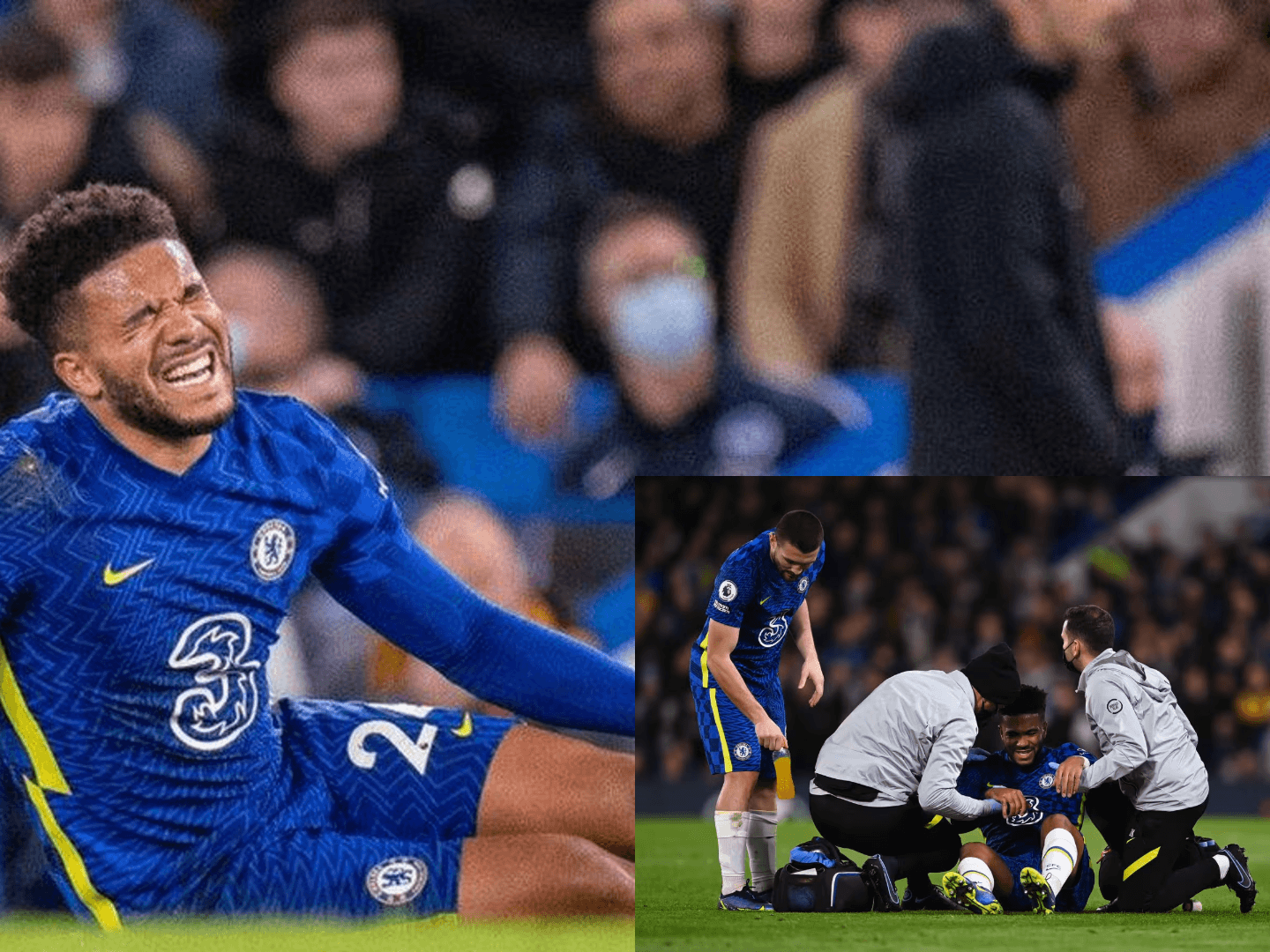
Reece James injury has once again disrupted Chelsea’s season, with the club captain sidelined by a hamstring problem that has become a recurring theme throughout his career. The defender is targeting a return after the international break, with October 10 against Bournemouth identified as a potential comeback date .
The injury occurred during Chelsea’s 2-2 draw with Hull City, a match James completed in full before the issue surfaced . He subsequently missed the Brentford defeat and was left out of England’s squad for the current international window . Thomas Tuchel, the England manager, confirmed the withdrawal was fitness-related rather than tactical .
Chelsea manager Xabi Alonso addressed the situation before the Brentford match, explaining the club’s cautious approach. “He had a little injury in his hamstring,” Alonso stated. “He tried, we waited until this morning but he couldn’t make it. Now we have enough time to prepare for the next one. He was just short of recovering” . The quote captures a familiar pattern: James pushing to return, the club monitoring his progress, and ultimately prioritising long-term fitness over immediate availability.
James’s absence from the Brentford fixture meant Levi Colwill, another Cobham academy graduate, wore the captain’s armband in his place . The defensive reshuffle reflects James’s dual value to Chelsea: he contributes both as a right-back and as a leadership figure within the dressing room .
The Bournemouth match on October 10 represents the working target for James’s return . Joao Pedro and Moises Caicedo are also pushing for comebacks around the same fixture, giving Alonso potential squad depth after a demanding opening period . However, no official confirmation from Chelsea FC has verified the exact severity of James’s hamstring issue beyond the club’s general optimism.
What makes this injury particularly concerning is its place within a much broader pattern. James has now sustained 10 separate hamstring injuries since December 2020 . That statistic, reported by Sky Sports, underscores the chronic nature of the problem rather than a single unfortunate incident . The repetition distinguishes James’s situation from routine muscle strains that resolve with standard rehabilitation.
The 2025/26 season alone illustrates the disruption. James missed 50 days with a hamstring injury between March and May 2026, sidelining him for nine matches . Earlier in the same campaign, he dealt with hip problems and another unspecified injury, missing a further five matches across January and February . Those absences followed a period of relative health in late 2025, when he had missed only five games through fitness issues .
The 2024/25 campaign was similarly fragmented. James missed 67 days between August and October 2024 with a hamstring injury, then a further 39 days from November to December 2024 with the same problem . Those two spells alone accounted for 25 matches missed across the season. A brief illness in March 2025 added one more absence, bringing his total time out that season to 111 days .
The most severe setback came during the 2023/24 season. After a 55-day hamstring injury between August and October 2023, James underwent surgery in December 2023 in an attempt to resolve the recurring issue . The operation sidelined him for 152 days, ruling him out of 31 matches and effectively ending his season . The surgical intervention was intended as a permanent fix, yet subsequent seasons have shown that hamstring problems have persisted .
James himself has spoken about the mental toll of repeated injuries. After undergoing surgery in December 2023, he addressed the abuse and negativity he received on social media. “Since this injury I’ve had a good amount of support but significantly more hate and negativity,” James wrote on Instagram. “Believe me, I don’t wanna be injured, I’m happiest when I’m playing football” . Those comments reveal the personal dimension behind the clinical injury data.
The current setback arrived at a moment when James had appeared to be managing his fitness more effectively. He had played six of Chelsea’s previous seven matches before the March 2026 hamstring injury, missing only five games that season up to that point . Liam Rosenior, Chelsea’s head coach at the time, described the setback as “really frustrating and disappointing” . The timing coincided with James signing a new six-year contract, making the interruption particularly unwelcome .
Chelsea have attempted to manage James’s workload carefully in recent seasons, recognising his susceptibility to muscle injuries . The approach has involved rotating him during congested fixture periods and monitoring his training load. Despite those measures, hamstring problems have continued to occur with regularity, suggesting that workload management alone cannot fully mitigate the issue .
For England, James’s availability remains a persistent question. He was expected to be named in squads for March 2026 friendlies against Uruguay and Japan before the hamstring injury intervened . With the 2026 World Cup approaching, his ability to remain fit through a tournament represents a significant uncertainty . England’s right-back options include Trent Alexander-Arnold, whose recall to the squad was partly prompted by James’s absence .
The comparison with other injury-prone defenders offers useful context. Players like Luke Shaw have also dealt with recurring fitness issues, yet James’s concentration of hamstring problems is distinctive in its specificity and frequency . Since December 2020, no other Chelsea player has missed as many matches through hamstring injuries as James . That consistency of diagnosis points to a structural or physiological vulnerability rather than random misfortune.
Chelsea’s immediate focus is on the Bournemouth fixture and whether James can complete a full training week without discomfort. The club’s medical staff will assess his progress during the international break before making a final decision . Given his history, the question extends beyond whether he returns for that specific match. The more significant issue is whether he can sustain fitness across a meaningful sequence of games without another interruption .
James’s importance to Chelsea remains undisputed when available. His defensive positioning, crossing ability, and leadership qualities make him a first-choice selection for both club and country . Yet his injury record has limited him to an average of roughly 20 to 25 appearances per season across recent campaigns, significantly below the output of a fully fit first-team regular . That gap between potential and availability defines the central challenge of his career at this stage.
For now, Chelsea and their supporters await the Bournemouth fixture with cautious optimism. James has returned from hamstring injuries before and will likely do so again. The recurring nature of the problem, however, means that each comeback carries an implicit question about how long it will last. The answer, based on five years of evidence, is rarely straightforward.
What injury does Reece James have?
Reece James is dealing with a hamstring injury, described by manager Xabi Alonso as “a little injury in his hamstring”. It is the same type of problem that has affected him repeatedly throughout his Chelsea career.
When did Reece James get injured?
James picked up the injury during Chelsea’s 2-2 draw with Hull City earlier in September 2026. He has not featured since that match, missing the subsequent defeat to Brentford.
When will Reece James return?
The target is Chelsea’s home game against Bournemouth on October 10, following the international break. Journalist Matt Law reported the injury is not considered serious and James is expected back after the break.
Will Reece James play for England in the next international window?
James withdrew from England’s squad for the current international break due to the hamstring issue. His availability for future England squads depends on whether he can maintain fitness after returning, given his history of recurring hamstring problems.
