

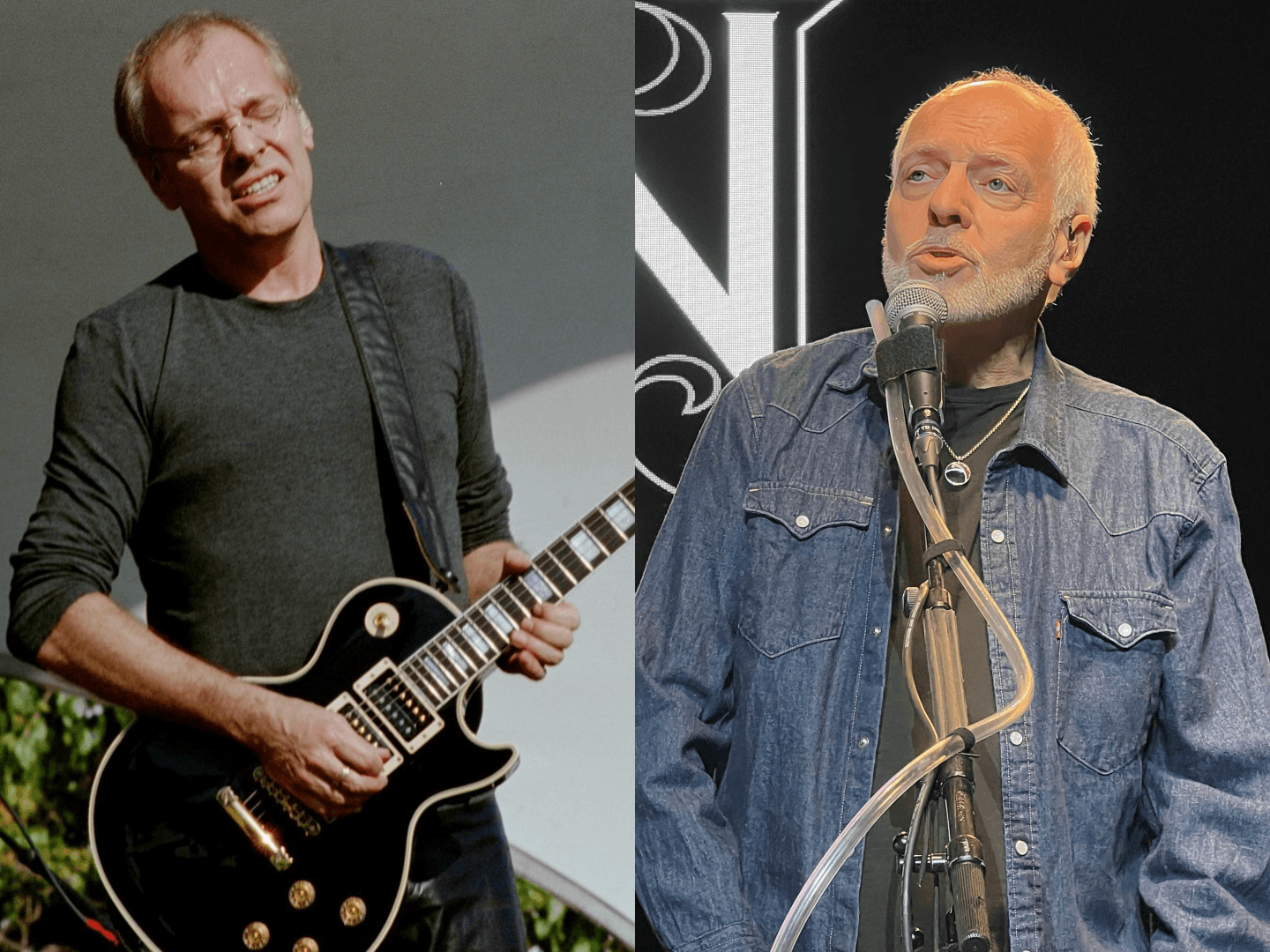
Peter Frampton songs are defined by a remarkable run of chart success in the 1970s, anchored by his landmark 1976 live album Frampton Comes Alive!. That record turned the English guitarist into a superstar and produced his three most enduring hits. This guide covers his biggest songs, the albums behind them, and the recognition that continues to define his legacy.
Peter Frampton is an English rock musician and songwriter who first gained attention as a member of the bands the Herd and Humble Pie before launching a solo career in 1972. His commercial breakthrough arrived in 1976 with the double live album Frampton Comes Alive!, which became one of the best-selling live albums in rock history. The album spent ten weeks at No. 1 on the Billboard 200 and was the top-performing album of 1976 in the United States.
The biggest Peter Frampton songs are closely tied to that live album. “Show Me the Way” reached No. 6 on the Billboard Hot 100, while “Do You Feel Like We Do” peaked at No. 10 and “Baby, I Love Your Way” hit No. 12. The studio versions of “Show Me the Way” and “Baby, I Love Your Way” first appeared on his 1975 album Frampton, while “Do You Feel Like We Do” originated on 1973’s Frampton’s Camel.
“Show Me the Way” is one of Frampton’s signature songs and a showcase for his melodic songwriting. The live version became a Top 10 hit in the United States and remains a staple of classic rock radio. Its enduring popularity helped establish Frampton as a solo artist after his earlier work with Humble Pie.
“Baby, I Love Your Way” stands as one of Frampton’s most notable ballads. The song reached No. 12 on the Billboard Hot 100 and has been covered by numerous artists over the decades. Its gentle melody and romantic lyrics made it a defining soft rock track of the 1970s.
“Do You Feel Like We Do” is an epic live performance that stretches to fourteen minutes on Frampton Comes Alive!. The track features Frampton’s signature use of the talk box, a device that combines the sound of the human voice with a guitar signal. Frampton first encountered the talk box in 1970 at Abbey Road Studios during sessions for George Harrison’s All Things Must Pass album, where Nashville pedal steel player Pete Drake demonstrated the device.
“I’m in You” became Frampton’s highest-charting single, reaching No. 2 on the Billboard Hot 100 in 1977. The title track from his follow-up studio album came close to topping the chart but was held off by Fleetwood Mac’s Rumours. Frampton has acknowledged that the album was not his best work, though he believed the song deserved its success.Peter Frampton Quick Bio
Notes on verification:
Marriage details are confirmed by divorce filings reported in 2011, which cited the 1996 marriage to Tina Elfers and prior marriages to Mary Lovett and Barbara Gold .
The age is calculated from his confirmed birth date of April 22, 1950.
Net worth figures are estimates from a financial tracking site that bases its model on BMG’s 2022 acquisition of Frampton’s catalog rights, with terms undisclosed . Treat as an estimate, not a confirmed figure.
“Signed, Sealed, Delivered (I’m Yours)” gave Frampton another Top 20 hit in 1977 with his cover of the Stevie Wonder classic. The track reached No. 18 on the Billboard Hot 100 and appeared on the I’m in You album. It remains one of his most recognizable recordings from that era.
“I Can’t Stand It No More” became a Top 20 hit in 1979, reaching No. 14 on the Billboard Hot 100. The song appeared on the album Where I Should Be and represented Frampton’s continued chart presence as the decade came to a close. It was his final Top 20 single of the 1970s.
The albums behind these songs tell a story of extraordinary commercial success. Frampton Comes Alive! was released in January 1976 and has been certified eight-times Platinum by the RIAA. It topped the Billboard 200 for ten nonconsecutive weeks and was the No. 1 album of 1976 in the United States. Its worldwide sales are estimated at over twelve million copies.
I’m in You, released in 1977, became Frampton’s most commercially successful studio album. It reached No. 2 on the Billboard 200 and was certified Platinum by the RIAA for over one million units sold in the United States. The album debuted at No. 5 and remained on the chart for thirty-two weeks.
Frampton received significant recognition for his career in 2024 when he was inducted into the Rock & Roll Hall of Fame as a performer. The induction came after years of being considered a notable omission from the institution. At the ceremony in Cleveland, he performed “Do You Feel Like We Do” with Keith Urban and chose “Baby (Somethin’s Happening)” as a bonus track.
Frampton has been candid about his approach to songwriting and chart success. “The truth is, I never thought about chart positions and things like that,” he told Guitar Player in 2024. “After I left Humble Pie in 1971, I didn’t give any thought to having hits. That just wasn’t what I concentrated on”. He added that his focus was always on whether he liked a song and whether it was recorded well.
Keith Urban, who performed with Frampton at the Rock Hall induction, offered a perspective on Frampton’s musicianship. “It was amazing getting to play with Peter,” Urban told Billboard. “He’s just got such a control over sensitivity and dynamics and intents. He makes it look easy, but it’s really hard to do what he does”.
Frampton’s legacy in rock music rests on a concentrated period of remarkable success in the 1970s. His biggest songs remain staples of classic rock radio, and Frampton Comes Alive! continues to be recognized as one of the defining live albums of its era. The 2024 Rock Hall induction affirmed his place among rock’s most influential performers.
What is Peter Frampton’s biggest hit song?
His highest-charting single was “I’m in You,” which reached No. 2 on the Billboard Hot 100 in 1977 . It was the title track from his follow-up album to Frampton Comes Alive! and remains his best chart performance as a solo artist.
What is the talk box and which songs feature it?
The talk box is a device that lets a guitarist shape the instrument’s sound using their mouth and vocal tract . Frampton became famous for using it on “Do You Feel Like We Do” and “Show Me the Way” from Frampton Comes Alive! . He first encountered the effect in 1970 at Abbey Road Studios during sessions for George Harrison’s All Things Must Pass, where Nashville steel guitarist Pete Drake demonstrated it .
When was Peter Frampton inducted into the Rock & Roll Hall of Fame?
Frampton was inducted as a performer in 2024 . The ceremony took place on October 19, 2024, in Cleveland, where he performed “Do You Feel Like We Do” with Keith Urban . He had been eligible for the honor since 1998 .
How many copies did Frampton Comes Alive! sell?
The album has sold more than 16 million copies worldwide and was certified 8x Platinum by the RIAA . It spent 10 weeks at No. 1 on the Billboard 200 and was the best-selling album of 1976 in the United States .
What was Peter Frampton’s first solo album?
His debut solo album was Wind of Change, released in 1972 . It followed his work with the Herd and Humble Pie, the latter of which he formed with Steve Marriott in 1969 . The album featured “It’s a Plain Shame” and “All I Want to Be (Is by Your Side)” .
