

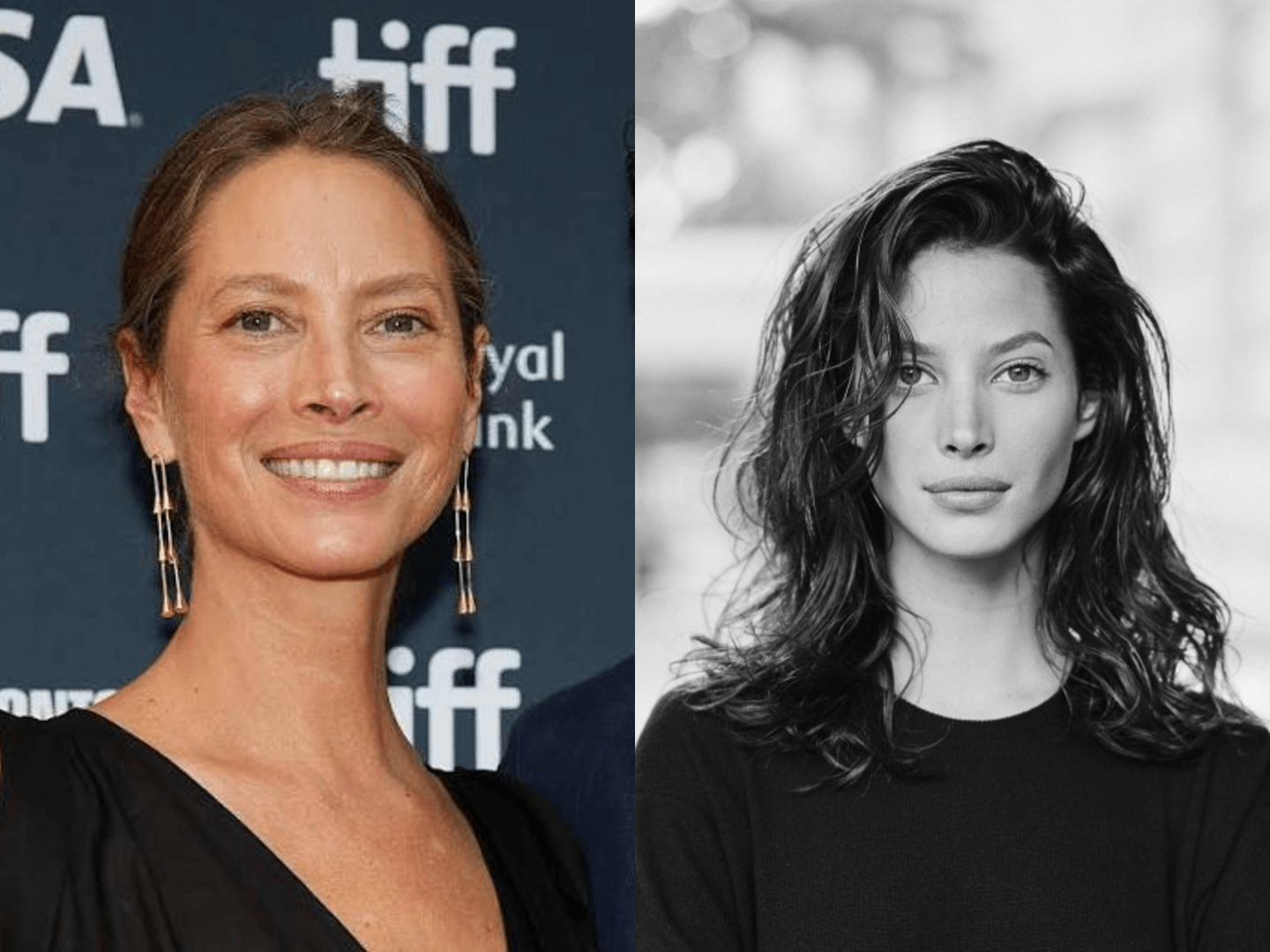
Christy Turlington was a defining face of 1990s fashion, yet her story differs sharply from the typical supermodel narrative. Rather than chasing tabloid fame, the christy turlington 90s era was defined by deliberate choices: education, privacy, and purpose over spectacle. She walked away at her peak to build a life beyond the runway.
Early Stardom and the Supermodel Trinity
Born on January 2, 1969, Turlington was discovered as a teenager and quickly rose through the fashion ranks . By 1990, she had signed a million-dollar contract with Calvin Klein and appeared on her first American Vogue cover . Her striking looks, shaped by her Salvadoran mother and American father, gave her what one fashion historian called a “slightly unplaceable edge” .
Alongside Linda Evangelista and Naomi Campbell, Turlington formed the core of what became known as the supermodel trinity . Yet even within this elite circle, she stood apart. A 1990 Vogue profile observed that unlike peers linked to Hollywood or rock stars, Turlington and Evangelista were “famous merely as faces” . She embraced this distinction rather than fighting it.
Her 1990 work also included a memorable appearance in George Michael’s “Freedom” music video, which featured the era’s top models lip-syncing the song . The video became a cultural touchstone, cementing the supermodel phenomenon in popular imagination. Turlington also appeared in Isaac Mizrahi’s documentary Unzipped and Robert Altman’s fashion satire Prêt-à-Porter .
The Anti-Supermodel Reputation
Turlington deliberately avoided the more sensational aspects of fame that defined many of her contemporaries. She was not linked to controversial sports figures or high-profile romances in the tabloids . This restraint earned her a reputation as an “alternative” supermodel, one who maintained privacy in an era of relentless exposure.
She also rejected the “supermodel” label itself, preferring to let her work speak for itself . In a culture that rewarded spectacle, Turlington’s quiet professionalism was itself a statement. She was widely regarded as one of the friendliest and most professional models in the business .
Stepping Away for NYU
The most defining decision of Turlington’s 1990s career came when she chose education over the runway. She enrolled at New York University in 1994, studying at the Gallatin School of Individualized Study . At the time, she was at the height of her earning power and visibility.
She graduated cum laude in 1999 with a Bachelor of Arts degree, concentrating in Comparative Religion and Eastern Philosophy . Fellow students recalled her dedication: “She sat in the front row of every class and would be the first to raise her hand” . The NYU registrar’s office reportedly faced a flood of male students signing up for any course she selected .
Turlington later explained that the decision to step back was partly triggered by an uncomfortable moment in 1996 when she was released from a Paris couture show after gaining a small amount of weight . That experience reinforced her desire to build an identity beyond modeling. She called her university years the “most important years of my life.”
Yoga, Wellness, and Living Yoga
Turlington discovered yoga at age 18 and maintained a serious practice for decades . This personal commitment became public in 2002 with the publication of her book Living Yoga: Creating a Life Practice, which explored the eight tenets of yoga and how to integrate the practice into daily life .
The book was republished by Penguin in 2005 and remains a respected guide for practitioners of all levels . Turlington connected her yoga practice to a broader philosophy of service, noting that “service” is a central tenet of the discipline. Her wellness advocacy extended beyond personal practice into public health work.Christy Turlington Quick Bio
Anti-Smoking Advocacy After Personal Loss
Turlington’s father, Dwain, died of lung cancer in 1997, a loss that reshaped her public priorities . She had been a teenage smoker but quit, and her father’s death inspired her to approach organizations including the CDC and the American Lung Association .
In 2000, she fronted a UK government anti-smoking campaign, appearing in television advertisements promoting the NHS smoking helpline . She spoke frankly about her father’s illness: “My dad missed so many important things in my life and in my family’s life as a result of an early death from lung cancer” . He never saw her graduate from NYU.
She also launched the award-winning website SmokingIsUgly.com in 2002, collaborating on multiple public health campaigns . Her advocacy work represented a rare instance of a 1990s supermodel using her platform for sustained social causes rather than entertainment projects.
Legacy and Continued Recognition
Turlington appeared on the November 1999 cover of Vogue alongside other iconic models, photographed by Annie Leibovitz, solidifying her place in fashion history. She has graced over 500 magazine covers throughout her career . The Metropolitan Museum of Art once dubbed her “The Face of the 21st Century” .
Her influence extended to later generations. Kate Moss reportedly named Turlington her favorite model . Designer Karl Lagerfeld said of her: “When you look at her, you think, ‘It just can’t be, such perfect faces just don’t exist!'” . Turlington later pursued a master’s degree at Columbia University’s Mailman School of Public Health, continuing her focus on maternal health .
Her 1990s story remains a template for models seeking longevity beyond image. Turlington proved that walking away at the right moment can be a career-defining move. She built a legacy on intention rather than spectacle, and that choice continues to define her.
Q: Why did Christy Turlington leave modeling in the 1990s?
Turlington stepped back from the runway in 1994 to enroll at New York University . She later revealed that a 1996 incident in Paris, where she was released from a couture show after gaining weight from quitting smoking, reinforced her decision to prioritize education over modeling . She graduated cum laude in 1999 with a degree in Comparative Religion and Eastern Philosophy .
Q: What was Christy Turlington’s role in the 1990s supermodel era?
Turlington was part of the “holy trinity” alongside Linda Evangelista and Naomi Campbell . She signed a seven-figure contract with Calvin Klein at age 20 in 1989 and appeared in the iconic 1990 George Michael “Freedom! ’90” music video . Unlike peers linked to tabloid scandals, she maintained a reputation as the “model’s model” with an unplaceable, timeless beauty .
Q: What did Christy Turlington do after leaving the runway?
She earned her degree from NYU in 1999 and authored Living Yoga: Creating a Life Practice in 2002 . After her father died of lung cancer in 1997, she became a prominent anti-smoking advocate, launching SmokingIsUgly.com in 2002 and fronting UK government campaigns . She later directed the maternal health documentary No Woman, No Cry in 2010 .
Q: Did Christy Turlington have a health scare related to smoking?
Yes. In 2000, at age 31, Turlington underwent a lung scan and was diagnosed with early-stage emphysema . She had started smoking at 13 and was smoking a pack a day by 16 before quitting at 26 . This diagnosis, combined with her father’s death from lung cancer, fueled her anti-smoking activism .
Q: What were Christy Turlington’s most iconic 1990s campaigns?
Her Calvin Klein work defined the era, including the exclusive contract signed in 1989 and the Eternity fragrance campaign with Mark Vanderloo in 1995 . She also appeared in Calvin Klein underwear campaigns starting in 1995, shot by Patrick Demarchelier and Peter Lindbergh . The 1990 British Vogue cover with the “Big Five” and the 1993 Met Museum “Face of the 20th Century” recognition further cemented her legacy .
