

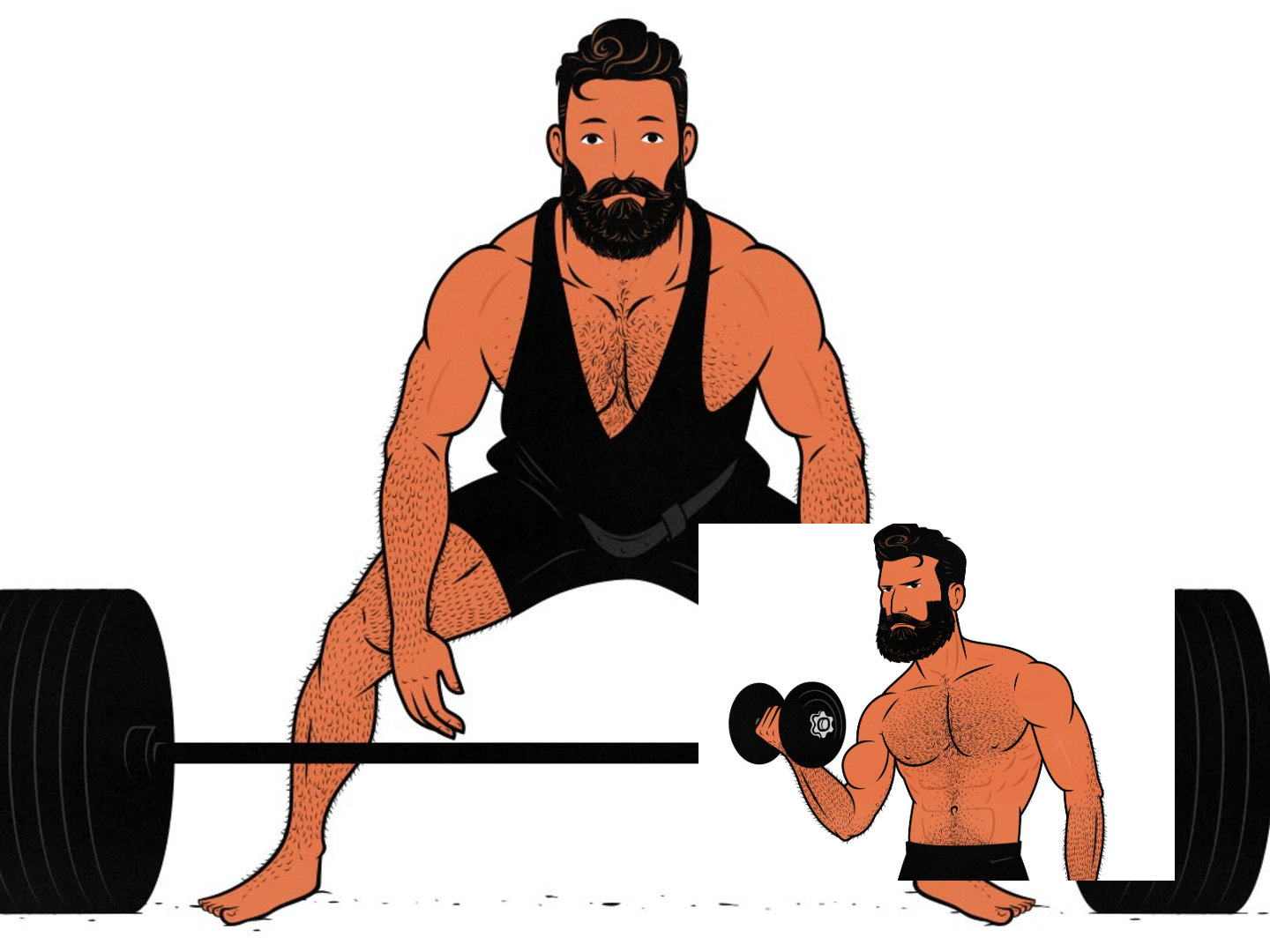
Can anyone do a bro split? Physically, most healthy adults can perform the exercises in a bro split, but authoritative guidelines suggest it is not the best first choice for most people, especially beginners. The classic bro split trains each major muscle group only once per week, while the American College of Sports Medicine now emphasizes that hitting all major muscle groups at least twice weekly matters far more than chasing a complicated routine .
What a Bro Split Actually Is
A bro split is the gym floor classic: chest on Monday, back on Tuesday, legs on Wednesday, shoulders on Thursday, arms on Friday. Each muscle group gets one dedicated session per week, often with high volume crammed into that single day.
The appeal is obvious. You get to focus intensely on one body part, chase a serious pump, and then leave that muscle alone for seven full days. For lifters who love training and want a clear daily mission, the structure feels satisfying.
The Frequency Problem Nobody Can Ignore
The issue is not whether a bro split can build muscle. It can. The issue is whether once-per-week training per muscle group is the most efficient use of your gym time. Current evidence points in a different direction.
The ACSM published a landmark Position Stand in 2026, its first major resistance training update since 2009. The review synthesized 137 systematic reviews covering more than 30,000 participants. Its central message was blunt: training all major muscle groups at least twice a week matters far more than finding a perfect program .
Stuart M. Phillips, PhD, a lead author on the Position Stand, put it plainly. “The best resistance training program is the one you’ll actually stick with,” he said. “Training all major muscle groups at least twice a week matters far more than chasing the idea of a ‘perfect’ or complex training plan” .
What the Research on Frequency Shows
A 2019 systematic review and meta-analysis by Brad Schoenfeld, Jozo Grgic, and James Krieger examined whether higher training frequency boosts hypertrophy. When weekly volume was equated, higher and lower frequencies produced no significant difference in muscle growth .
That finding is often misread as a defense of the bro split. It is not. The practical takeaway is that frequency becomes a tool for distributing volume effectively. If you can only tolerate so many hard sets per session, splitting that volume across two weekly sessions often produces better quality work than stuffing it all into one brutal day.Quick Bio: Joe Weider
| Field | Information |
|---|---|
| Full name | Josef “Joe” Weider |
| Born | November 29, 1919 |
| Died | March 23, 2013 (age 93) |
| Birthplace | Montreal, Quebec, Canada |
| Nationality | Canadian |
| Profession | Publisher, entrepreneur, bodybuilding promoter |
| Height | 5 ft 10 in (1.78 m) |
| Education | Left school around age 12 to work; no formal higher education listed |
| Years active | Approximately 1940–2013 |
| Notable works | Founded Your Physique (1940), later Muscle & Fitness; co-founded the IFBB; created Mr. Olympia |
| Awards | International Sports Hall of Fame (2014, posthumous); California Museum Hall of Fame (2010); Publisher of the Year (1983) |
| Net worth | Approximately $35 million at death (reported by TMZ) |
| Spouse | Betty Brosmer (m. 1961–2013, his death); previously married to Hedwiges “Vicky” Uzar (divorced) |
| Social media | No verified personal accounts; legacy content hosted at joeweider.com |
Sources: Birth, death, nationality, profession, height, and spouse details from Wikipedia and the Joe Weider official site . Awards from the official Joe Weider awards page and ISHOF . Net worth from TMZ . Notable works and years active from Wikipedia and the official biography .
If you actually wanted a bio table for a different person (for example, an author or athlete you have in mind), let me know the name and I will research it.
Who the Bro Split Actually Suits
Intermediate and advanced lifters are the best candidates. These are people with at least a year of consistent training, solid exercise technique, and the recovery capacity to handle high per-session volume without their later sets turning into junk reps.
People who can reliably train four to six days per week also fit the bro split well. The schedule demands commitment. If your week regularly collapses to two or three gym visits, a bro split leaves some muscles untouched for far too long.
Lifters who genuinely enjoy dedicated body part days and will stick with them deserve consideration too. Adherence is not a minor detail. The ACSM guidelines explicitly prioritize consistency over complexity, and a program you abandon has zero value .
Who Should Look Elsewhere First
Beginners under roughly one year of training are the clearest group to steer away from a classic bro split. They need movement practice, repeated exposure to fundamental patterns, and more frequent stimulation. Full-body or upper/lower splits serve those needs better.
Anyone limited to two or three gym days per week should also reconsider. A bro split spreads five or six muscle groups across those days, which means some body parts get minimal attention. Higher-frequency alternatives make more sense for a compressed schedule.
Older lifters may benefit from more frequent, lower-volume sessions as well. One massive weekly blast per muscle group can be harder to recover from than two moderate sessions, especially for joints and connective tissue.
How Bodybuilders Actually Train
Even among competitive bodybuilders, the pure once-per-week bro split is not as universal as gym lore suggests. A 2022 survey of 235 competitive male bodybuilders found that 85.5% used split routines, but more than 50% trained major muscle groups twice per week .
That detail matters. The people most associated with bro-split culture often modify it toward higher frequency. They still enjoy focused sessions, but they acknowledge that training a muscle twice weekly fits better with hypertrophy research and their own recovery patterns.
Bro Split Versus the Alternatives
Compared with an upper/lower split, the bro split offers more per-session focus but less frequency. An upper/lower split trains each muscle twice weekly across four days, which aligns neatly with the ACSM recommendation. It also shortens individual workouts.
Compared with push/pull/legs, the bro split is simpler but less efficient for volume distribution. A six-day push/pull/legs rotation hits each muscle twice weekly and spreads fatigue across more sessions. The bro split concentrates fatigue into one muscle group per day, which some lifters tolerate well and others do not.
Compared with full-body training, the bro split is the opposite extreme. Full-body sessions are ideal for beginners and time-crunched lifters. Bro splits are for people who want depth on specific muscle groups and have the schedule to support it.
A Practical Way to Decide
Ask yourself three questions. How long have you trained consistently? How many days can you realistically reach the gym each week? And do you recover well from long, high-volume sessions?
If you have trained for less than a year, choose a higher-frequency plan first. If you can only train three days weekly, choose a split that touches every muscle more than once. If you are experienced, train four to six days, and genuinely enjoy body part days, a bro split can work.
You can also modify it. Add a second weekly session for each muscle group, even a shorter one. That small change brings the bro split closer to the frequency the ACSM recommends without abandoning the structure you enjoy.
The Bottom Line
Can anyone do a bro split? Physically, almost anyone can. Practically, it is not the smartest starting point for most people. The evidence favors training each major muscle group at least twice weekly, and a classic bro split does the opposite.
If you are advanced, committed, and consistent, the bro split can build muscle and keep you engaged. If you are new, busy, or recovery-limited, a higher-frequency approach will likely serve you better. Choose the plan you will actually follow, but choose it with the frequency evidence in view.
Is a bro split good for beginners?
Generally, no. Beginners under roughly one year of training need repeated exposure to fundamental movement patterns, and a bro split trains each muscle group only once per week. The National Academy of Sports Medicine notes that bro split sessions can involve too much volume for newer lifters, making shorter and more frequent full-body or upper/lower sessions a better starting point . A Men’s Fitness review of training after 40 also recommends full-body or upper/lower routines for most lifters, reserving bro splits for advanced bodybuilders .
How many days a week does a bro split require?
The classic version runs five days per week, with one day each for chest, back, legs, shoulders, and arms. A four-day variant drops the dedicated arm day and tacks biceps and triceps onto chest and back sessions . A six-day version adds a second session for a lagging muscle group or a dedicated ab day . Anyone limited to two or three gym days should avoid the structure entirely, since some muscles would go untouched for long stretches.
Can you build muscle on a bro split?
Yes, muscle growth is possible if weekly volume is sufficient and progressive overload is applied. The ACSM emphasizes that total weekly volume and consistency drive results more than the specific split . However, research by Schoenfeld, Grgic, and Krieger found that when weekly volume is equated, training a muscle twice per week tends to produce slightly better hypertrophy than once per week . The bro split works, but it is not the most efficient option for most natural lifters.
What is a better alternative to the bro split?
An upper/lower split or push/pull/legs routine trains each major muscle group twice per week, aligning with the ACSM recommendation of at least two weekly sessions per muscle group. An upper/lower split fits neatly into four gym days, while push/pull/legs suits five or six days. Both spread volume across more sessions, which often improves set quality compared with cramming 15 to 25 sets into a single bro split workout .
