

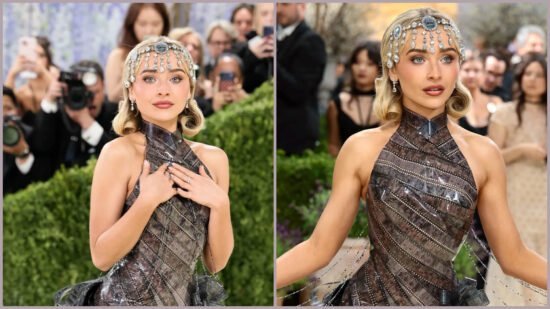
When Sabrina Carpenter arrived at the 2026 Met Gala, her outfit did more than make an impression. It redefined what a red-carpet look can communicate, blending fashion with cinematic history in a way that shifted conversations across style, culture, and storytelling. What she wore that night became a visual signature for the event and a testament to how thoughtful design can resonate instantly.
The 2026 Met Gala, held at the Metropolitan Museum of Art in New York, carried the theme Fashion Is Art. This theme invited creators to interpret attire as expressive artistry rather than decoration. Carpenter’s choice honored that invitation with extraordinary clarity. Her ensemble was not simply a dress. It functioned as a statement piece, anchored in personal vision and layered with artistic intention.
A Dress That Wrote Its Own Narrative
Carpenter’s look was a custom design by Dior, conceived by creative director Jonathan Anderson. What made the outfit exceptional was its material foundation: actual strips of film. These were not printed patterns or photographic motifs. They were authentic celluloid film, woven into the structure of the gown itself. Within those strips were frames drawn from the 1954 film Sabrina, starring Audrey Hepburn a deliberate link to classical cinema and the timeless influence of Hepburn’s style.
Traditional red-carpet garments rely on luxurious fabric, color, and silhouette to create impact. Carpenter’s custom gown relied on storytelling. The physical film strips brought texture and layered memory into a garment that otherwise could have existed as couture abstraction. The result was immediate and striking: a dress that read like a moving portrait, lodged between fashion and film.
The high-neck halter silhouette, a dramatic thigh-high slit, and a sweeping tulle train gave the gown a refined structure that balanced innovation with elegance. Rhinestones and jeweled accents captured light on the red carpet, giving the ensemble kinetic energy without overwhelming its central concept. Each detail served the narrative, not just the spectacle.
A Gesture Toward Classic Cinema
Audrey Hepburn’s Sabrina represents a particular kind of cinematic grace determined by elegance, emotional nuance, and cultural resonance. Carpenter’s decision to reference that film through actual celluloid elevated the outfit beyond homage. It became a conversation between eras, connecting Hollywood’s past with contemporary expression.
This was not a casual nod. It was an embodied reflection on how visual media shapes collective memory. Rather than wearing still images or printed fabric, the use of real film strips acknowledged the medium itself. Fashion and cinema, in this context, became inseparable. The design challenged observers to consider dress not only as garment but as artifact. It invited reflection on how both film and fashion preserve moments in time.
Carpenter’s hairstyle contributed to this conversation. Soft retro waves and strategically placed curls suggested a timeless aesthetic without feeling derivative. Paired with a delicate jeweled headpiece, the overall appearance felt rooted in tradition while remaining fresh and forward-looking.
A Performance Within Fashion
| Attribute | Details |
|---|---|
| Full Name | Sabrina Annlynn Carpenter |
| Date of Birth | May 11, 1999 |
| Age | 26 (as of 2026) |
| Birthplace | Quakertown, Pennsylvania, USA |
| Nationality | American |
| Height | 5′0″ (152 cm) |
| Profession | Singer, songwriter, actress |
| Music Genre | Pop, Dance, R&B |
| Years Active | 2008–present |
| Notable Acting Roles | Girl Meets World, Tall Girl series |
| Major Albums | Emails I Can’t Send, Short n’ Sweet, Man’s Best Friend |
| Met Gala 2026 Highlight | Custom Dior gown made of film strips honoring Sabrina (1954) |
The Met Gala experience for Carpenter extended beyond the red carpet. During the evening she performed live and later changed into additional looks. Each wardrobe change was intentional and carried thematic weight.
One of these post-carpet ensembles drew from the work of Andy Warhol, interpreted through Versace’s bold graphic sensibilities. Another, a flowing gold fringe gown by Bob Mackie, framed her performance with Stevie Nicks, creating a striking juxtaposition of texture and movement. These shifts in attire were not superficial additions. They served as extensions of artistic chapters, each with its own voice within the language of style.
Seeing Carpenter transition from one look to another emphasized a broader creative mindset. This was not fashion for display. It was fashion integrated with performance, narrative, and emotional presence.
A Shift in Red-Carpet Storytelling
The instant recognition of Carpenter’s Met Gala outfit did not happen by accident. Outfit choices at major events often make headlines, but few resonate as narrative catalysts. In this case, the dress functioned as a lens through which audiences understood the theme, the artist, and the broader artistic conversation of the night.
Designers and stylists alike responded to this moment as a meaningful departure from trend-centric fashion. Many fashion commentators described the gown as bridging craft with concept, reinforcing that artistry in attire can carry intellectual weight as well as visual allure. Critics noted that the look avoided mere surface beauty, instead inviting reflection on heritage and value.
Carpenter’s presence on the host committee for the Gala underscored her role as active participant rather than passive attendee. This positioned her not just among those celebrating art but among those shaping the conversation around how fashion expresses identity.
In her career trajectory, this moment marked a maturation in creative articulation. Over the years, Carpenter has moved from early acting roles into international music and public presence. Her style evolution has mirrored her artistic expansion. Rather than adopting ready-made concepts, she has increasingly engaged with fashion as a form of self-expression. Her Met Gala look signified that engagement in the most profound way.
Industry Response and Cultural Impact
Industry response to Carpenter’s outfit was immediate and layered. Fashion publications highlighted the design as one of the most meaningful interpretations of the evening’s theme. Commentators emphasized the originality of using film as material not just as aesthetic content but as creative foundation. This distinction set the look apart from typical celebrity fashion choices.
Online reactions followed. Images and discussions spread rapidly across platforms, with many noting the emotional depth of the design’s reference. Observers remarked that the gown appealed to a yearning for narrative richness in fashion a desire for garments that mean something beyond surface beauty.
What intensified the impact was the dialogue the outfit generated. Talk shifted from beauty and trend to intent and meaning. Discussions centered on why someone would choose to wear cinema itself, what that choice said about the wearer, and how fashion could serve as a form of cultural memory.
In that context, the outfit became iconic not simply because it was visually arresting but because it engaged audiences intellectually and emotionally. It reframed assumptions about red-carpet attire, suggesting that symbolism and storytelling can coexist with craftsmanship and glamour.
A Broader Reflection on Fashion and Narrative
Carpenter’s Met Gala moment did more than mark personal achievement. It contributed to a broader reflection on how fashion intersects with other forms of cultural production. By grounding a couture gown in celluloid history, designers and wearers alike were encouraged to rethink the boundaries between art forms.
This moment illustrated that fashion can be a bridge between memory and expression. The dialogue between the past and the present, embodied in the design, reminded observers that aesthetic choices can honor history while also pushing forward.
Carpenter’s decision to ground her look in historical reference, then layer it with contemporary sensibility, exemplified a mode of fashion that feels both rooted and alive. It pointed to a future in which attire can do more than signal status or trend. Fashion could tell stories that endure.
The Lasting Impression
In the days and weeks following the event, retrospectives and commentaries continued to revisit Carpenter’s look, exploring its design, intention, and impact. What made this outfit stand out was its integrity. It was thoughtful rather than opportunistic. It articulated artistic curiosity rather than stylistic convenience.
At its best, fashion invites reflection on who we are, where we come from, and how we choose to express ourselves. Carpenter’s Met Gala gown achieved this. It transformed a moment into memory, garment into narrative, and red carpet into stage. This confluence of meaning and beauty is what allowed the outfit to become iconic so rapidly.
Carpenter’s appearance that night stands as an example of how fashion, when approached with intention and depth, can extend far beyond spectacle. It became an enduring image not because it sought recognition, but because it earned it through expression.
Frequently Asked Questions
What designer dress did Sabrina Carpenter wear to the Met Gala?
She wore a custom Dior gown designed by Jonathan Anderson, crafted entirely from film strips as a tribute to Audrey Hepburn’s Sabrina.
Who dressed Sabrina Carpenter for the Met Gala?
Her look was styled with the collaboration of her fashion team, led by professional stylists working closely with Dior to ensure the outfit, hair, and accessories harmonized perfectly.
Which makeup brands did Sabrina Carpenter use for her Met Gala look?
While the exact brands were not officially disclosed, her makeup highlighted a soft, retro-inspired palette, focusing on glowing skin, defined eyes, and classic red lips.
How to get a hairstyle like Sabrina Carpenter’s Met Gala appearance?
Her look featured soft retro waves with vintage-inspired curls pinned into a faux bob. A professional stylist can recreate this using curling irons, pins, and light-hold hairspray.
What jewelry did Sabrina Carpenter accessorize with at the Met Gala?
She complemented her gown with a delicate jeweled headpiece and subtle rhinestone accents, adding elegance without overshadowing the dress.
Read More : What Is Instructional Design in Education and How It Helps
